
Aloha ʻĀina at 20,000 Feet: Barry Choy’s Message to Hawaiʻi’s Next Generation of Scientists
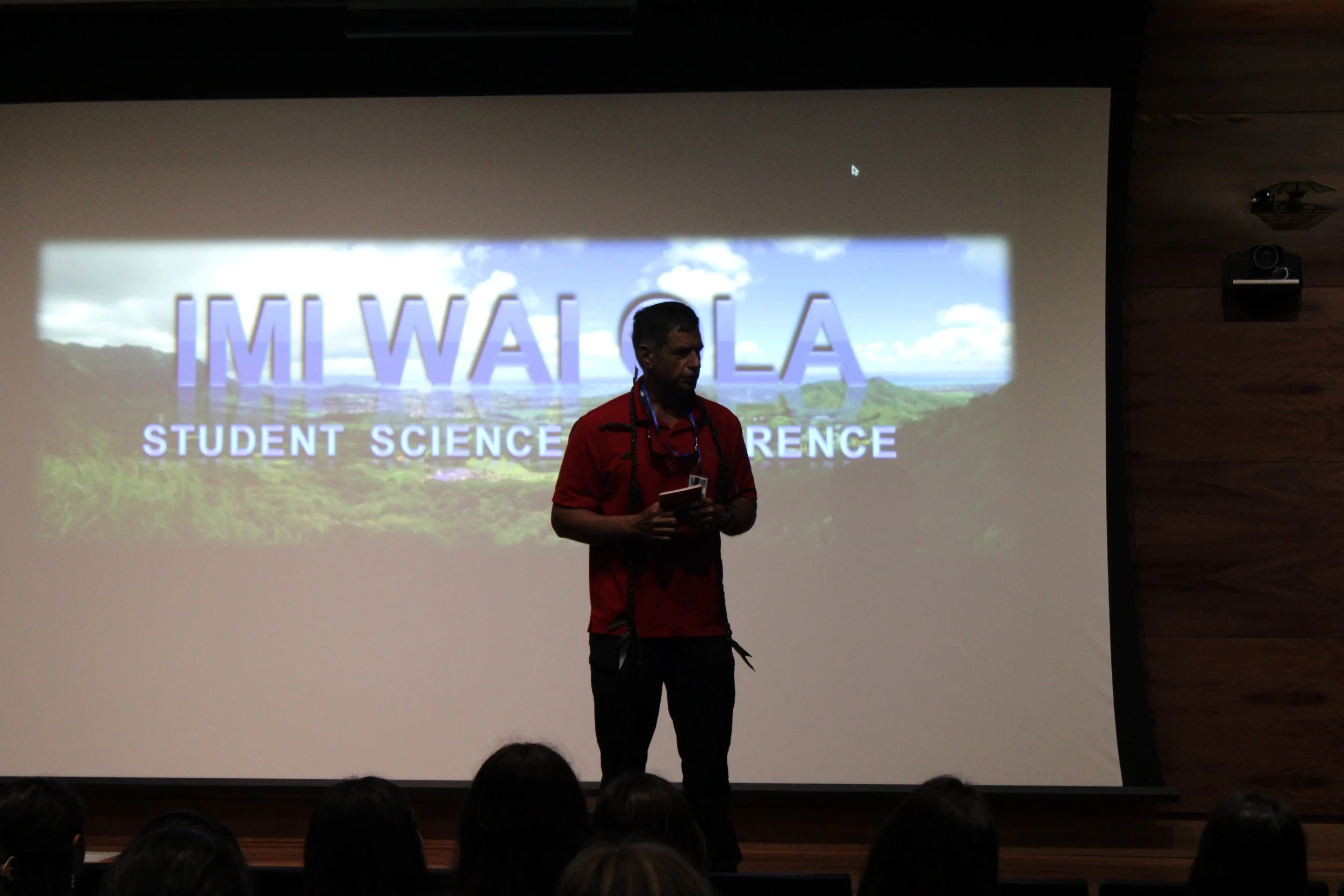
Barry Choy shares his story with Hawaiʻi students. Photo credit: PAF ʻOhana
At the 2026 ʻImi Wai Ola Annual Student Science Conference, 114 attendees, including 65 K-12 students working on 46 projects across 11 schools, gathered to share research, exchange ideas, and learn about the environmental challenges shaping their communities.
Across many projects and conversations, one question became clear: how will the next generation navigate a future shaped by climate change, environmental uncertainty, and changing relationships to land and water?
Barry Choy, our keynote speaker, offered an answer: it all begins with paying attention to place.
A veteran NOAA Corps officer and hurricane hunter pilot with more than 30 years of federal service, Choy spent his career flying into major storms, leading scientific operations, and advising on climate-related security threats. He has lived all over the world. Yet, in his keynote the focus was always Hawai’i. “You have a big benefit here. You live on an island with the ocean around you.”
He experienced this firsthand. His childhood of diving, fishing, and navigating local waters made environmental awareness an instinct. “I’m always in tune to the wind and the waves and birds and what’s happening.”
That perspective resonated throughout the conference, where students engaged deeply with environmental issues through projects rooted in their own communities and lived experiences. Guided by aloha ʻāina and kuleana, participants explored how science can strengthen relationships to place rather than separate people from it.
For many students, the conference represented more than an academic event. It created space to contextualize science as something connected to their own observations, communities, lives, and futures, not merely a profession or academic pursuit.
Choy’s own story reflected that. He shared how a high school science fair project connected to diving in Kāneʻohe Bay eventually opened unexpected pathways into marine science, meteorology, conservation work, aviation, and hurricane reconnaissance. The throughline was always his connection to place, curiosity, and hard work, not a masterminded planned trajectory.
To do this, he had to be open to opportunities, to building relationships, and to learning, particularly from mentors. “You’re not going to know this right now,” he told students, “but there’s some key people here and you’re going to look back and say maybe today was the day.”
That’s exactly why we gather students at ʻImi Wai Ola, to create spaces where students can build technical skills and long-term relationships grounded in stewardship, curiosity, and community. This balance between guidance and self-discovery remained a theme throughout the conference, where students went beyond learning about environmental problems to actually practicing observation, communication, research, and stewardship in ways deeply connected to Hawaiʻi’s landscapes and communities.
Gatherings like ‘Imi Wai Ola envision a future where the next generation of leaders is scientifically capable and firmly grounded in aloha ʻāina, and help bring it to fruition.
Learn more about Pacific American Foundation’s youth and ʻāina-based education programs at thepaf.org
