
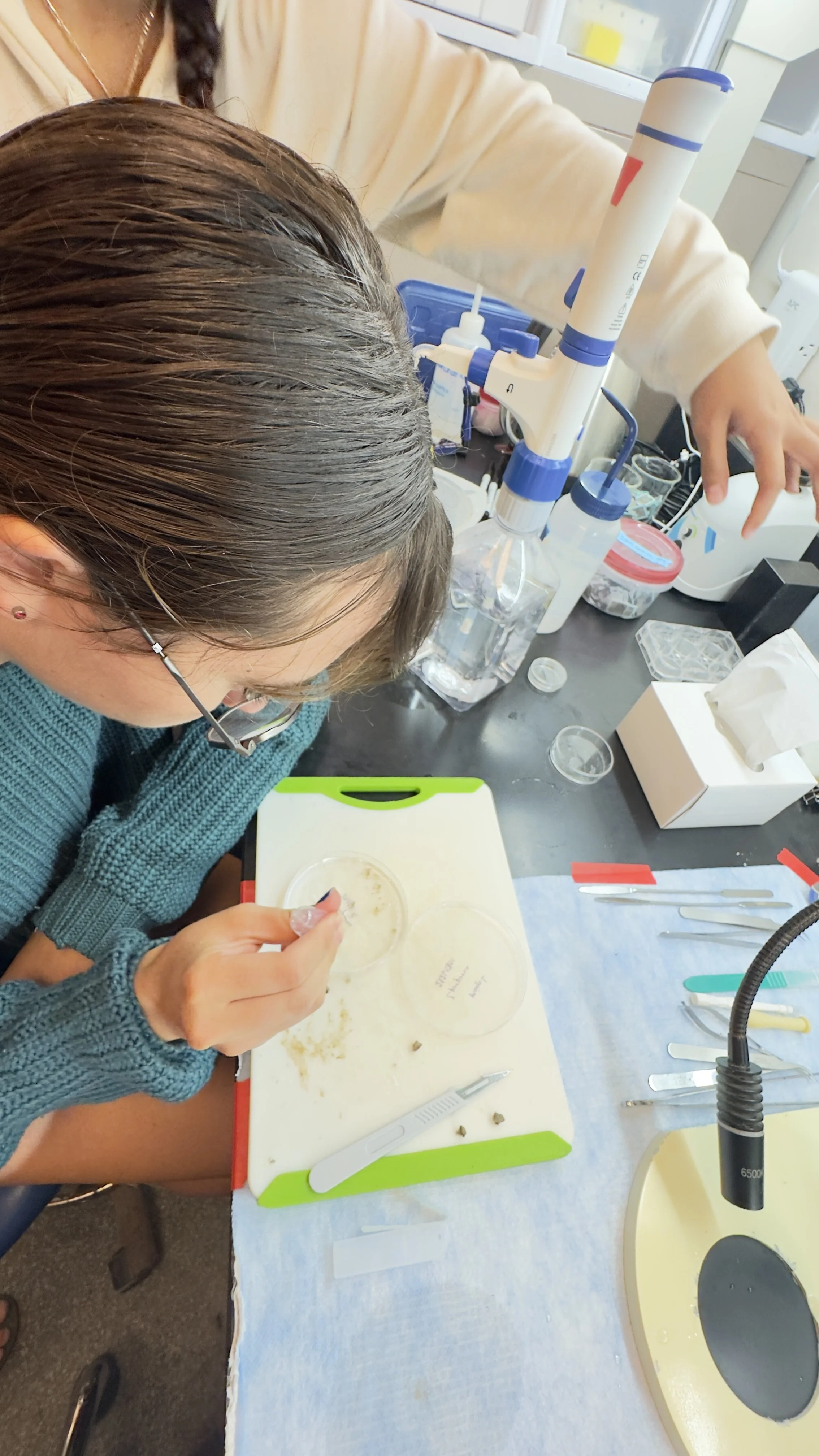
A Kilo Kai student works with a small coral to create tiny tissue pieces called explants—each capable of becoming a new coral.
At the lab bench, a Kilo Kai student gently works with a small coral called Leptastrea purpurea. With steady hands, they separate the living tissue from its hard skeleton—revealing something remarkable: the building blocks of new life.
These tiny pieces of coral tissue, called explants, hold incredible potential. When carefully removed with all three tissue layers intact, they can transform—rounding into a ball-like shape and returning to a state similar to a coral larva. But unlike natural larvae, which come from reproduction between corals, these explants are created asexually. Still, they carry the same power: the ability to settle, grow, and become entirely new coral colonies.
From one coral, many futures can grow.
Some of these explants will be preserved using advanced cryopreservation techniques developed in Hawaiʻi. This process gently freezes living coral material so it can be revived later—creating a kind of living genetic library. In a time when reefs face rising temperatures and pollution, this ensures that the unique identity of this coral can live on for generations.
Others will be guided to settle onto surfaces, where they will grow into young coral colonies. This method has already shown promise in restoring damaged reefs—helping more young corals survive and rebuild the structures that support ocean life. When these lab-grown corals are strong enough, they can be returned to the ocean, helping to restore balance to ecosystems that so many communities depend on.
What makes this work especially powerful is how much life can come from a single coral.
One small colony can help preserve its lineage for the future while also creating many new corals for today’s reefs—speeding up a process that would normally take decades.
For The Next 200, this is more than science. It is a commitment. By bringing together ʻike kūpuna—ancestral knowledge of caring for place—with modern innovation, we are shaping a future where reefs are not just surviving, but thriving. A future where our keiki and moʻopuna inherit oceans that are abundant, resilient, and alive.
