
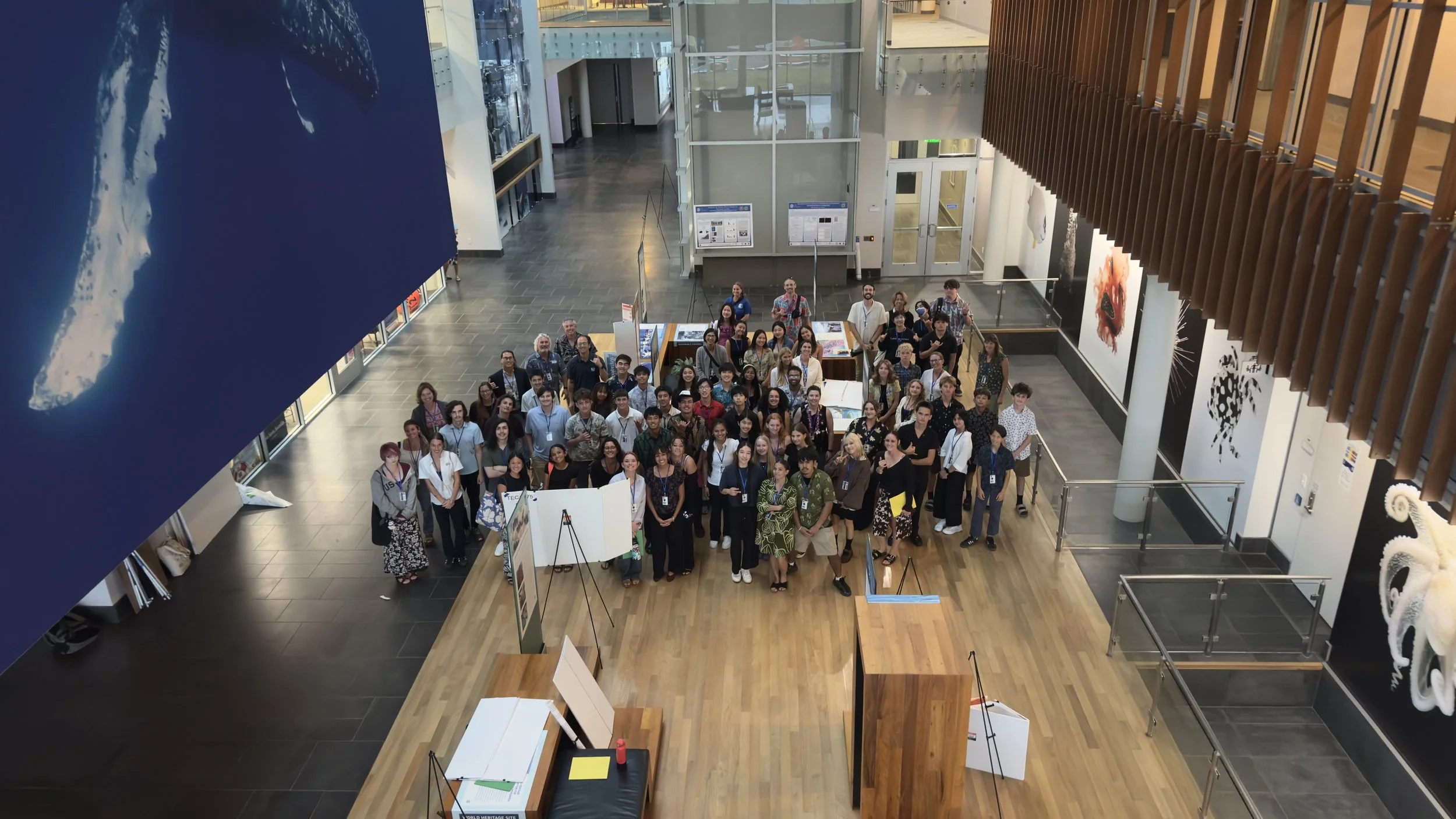
Student presenters gathered at NOAA’s Inouye Regional Center on Ford Island, Oʻahu for the 9th annual ʻImi Wai Ola conference. Photo credit: Derek Esibill
If Hawaiʻi’s future environmental challenges will be inherited by today’s students, then students must also be empowered to shape the solutions.
That idea was the foundation of the ʻImi Wai Ola Student Science Conference, an annual gathering where students from across Hawaiʻi come together to present projects, and, more importantly, engage with one another as collaborators, researchers, and emerging leaders. Through various initiatives—including Pacific American Foundation’s Kilo Kai program, APIS, the PAF internship program—students investigate environmental issues directly affecting their communities. By learning by doing, ma ka hana ka ʻike, they build the confidence and relationships needed to be problem-solvers.
For conference organizer and PAF COO Derek Esibill, ʻImi Wai Ola began with a practical challenge: an environmental education grant required students to present their work at a conference, but existing conferences weren’t tailored to the realities of student schedules. “So I went ahead and said: ‘Let’s just make our own conference!’”
It went above and beyond a grant deliverable. On its 9th year, ʻImi Wai Ola partners with NOAA, taking place annually in the Inouye Regional Center on Ford Island, with more than a dozen science professionals and hosting 50+ students.
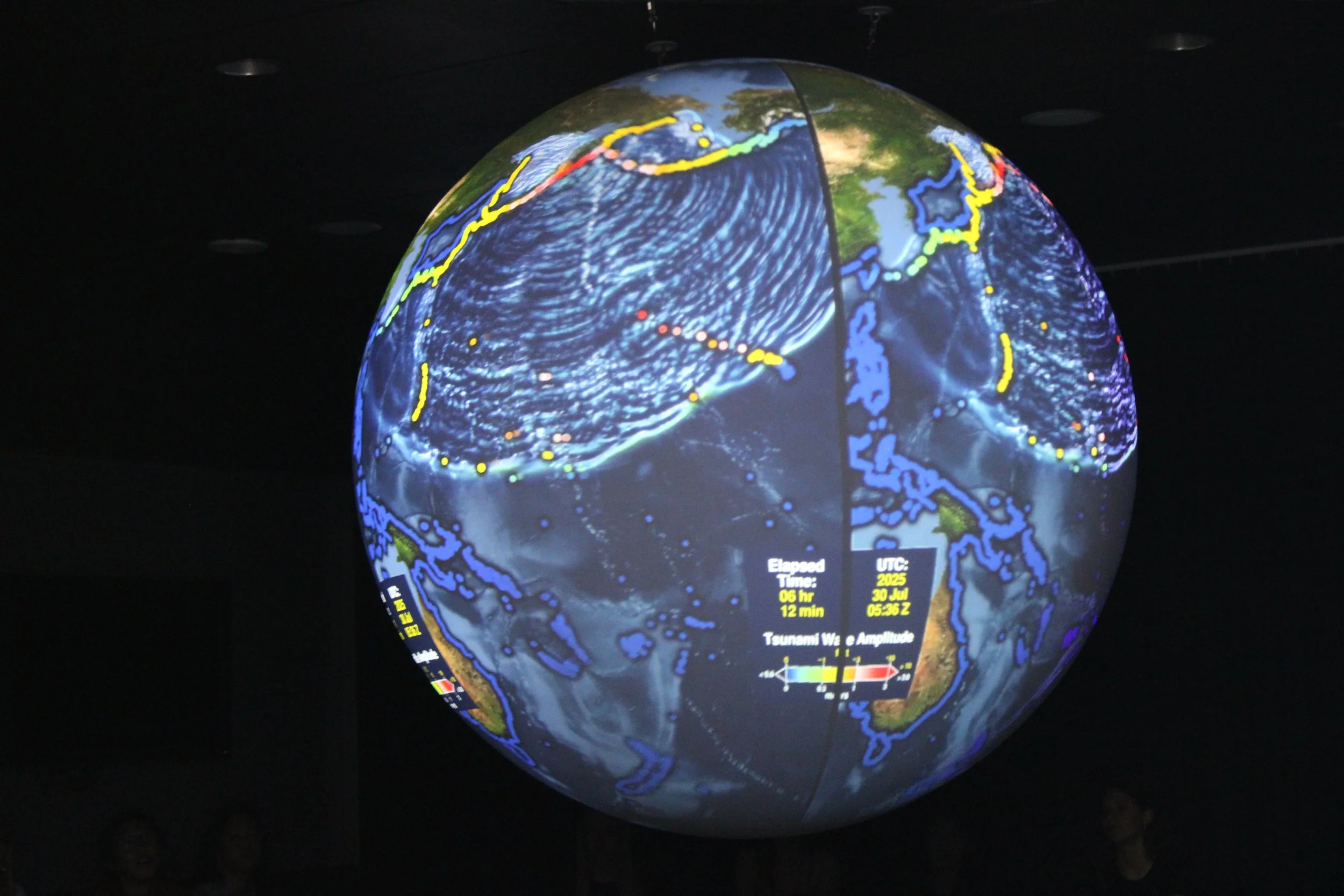
The Inouye Regional Center offers students opportunities to engage with science in action. Photo credit: Grace Cajski
It’s a space intentionally designed around collaboration. Walking around ʻImi Wai Ola—hearing students cheer for each other, ask each other questions, talk during lunch—you notice that interactions are not shaped around rankings, awards, or competition, ʻImi Wai Ola encourages students to exchange ideas, discuss methods, build pilina, and learn from one another’s work. Science fair is wonderful, it really give students a platform to dive deep into questions and really think about them, however it really focuses on the competition between projects and rarely affords students the opportunity to interact with each other. In Imi Wai Ola,“We back off on the competition, and drive in the collaboration,” Derek said. “How do we work together to answer these questions?”
That question extends beyond students alone. Derek believes the myriad of environmental realities this generation of Hawaiʻi students faces require a different model of learning: a learning that is grounded in authentic community problems and collective problem-solving. A science that is about how we can uplift each other.
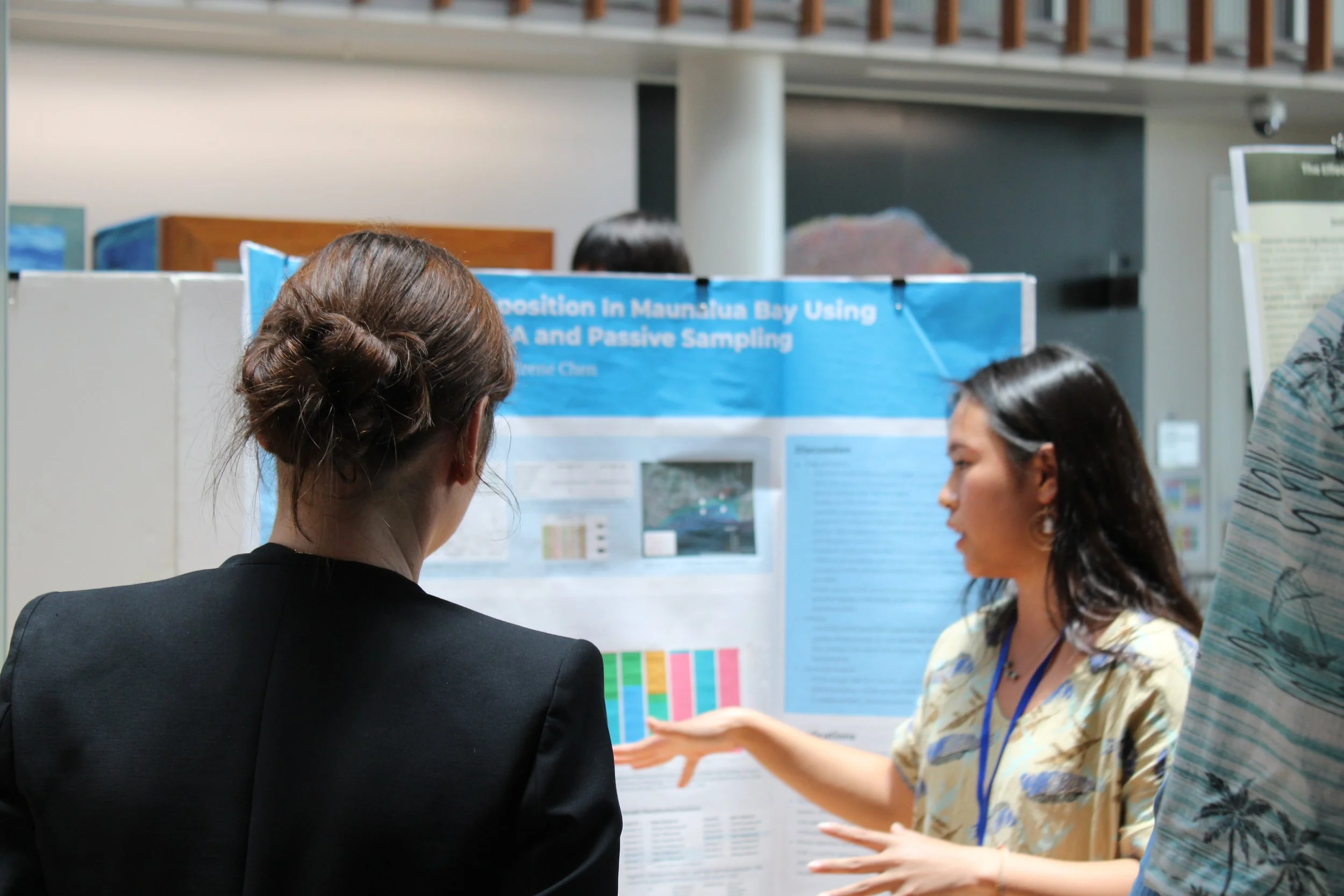
ʻImi Wai Ola poster presenters share their research and answer questions. Photo credit: Grace Cajski
Through Kilo Kai and related programs, students get to learn about marine and environmental science in practice, not just theory. They conduct research tied directly to the places where they live, whether that be exploring how to reconnect water flow between Kawainui and Kaelepulu Stream, testing water quality in Kailua Bay after this spring’s Kona Lows, or assessing coral reef health. Students are able to ask authentic research questions and identify problems we must address.
“Students get to see themselves as the architects of those solutions, because they are actually doing it. They did the work, they ran the analysis, they found out the answers. It’s their project.”
By fostering relationships of responsibility through sense of connection, belonging, and relationships. students can grow into aloha ʻāina. “We only mālama what we have aloha for,” Derek said.
And that’s something that this year’s ʻImi Wai Ola presenters and participants demonstrated. “They care,” Derek said. “They care an awful, awful, awful lot.”
Gatherings like this one give an opportunity to channel that care into community, providing a platform to share, learn, and celebrate; providing a place for students to find hope, in each other and in great mentors; and providing inspiration to encourage many more years of ʻimi wai ola.
Science in community is a powerful thing. It becomes even more powerful in the hands of the next coming generation of scientists, caretakers, and community leaders.
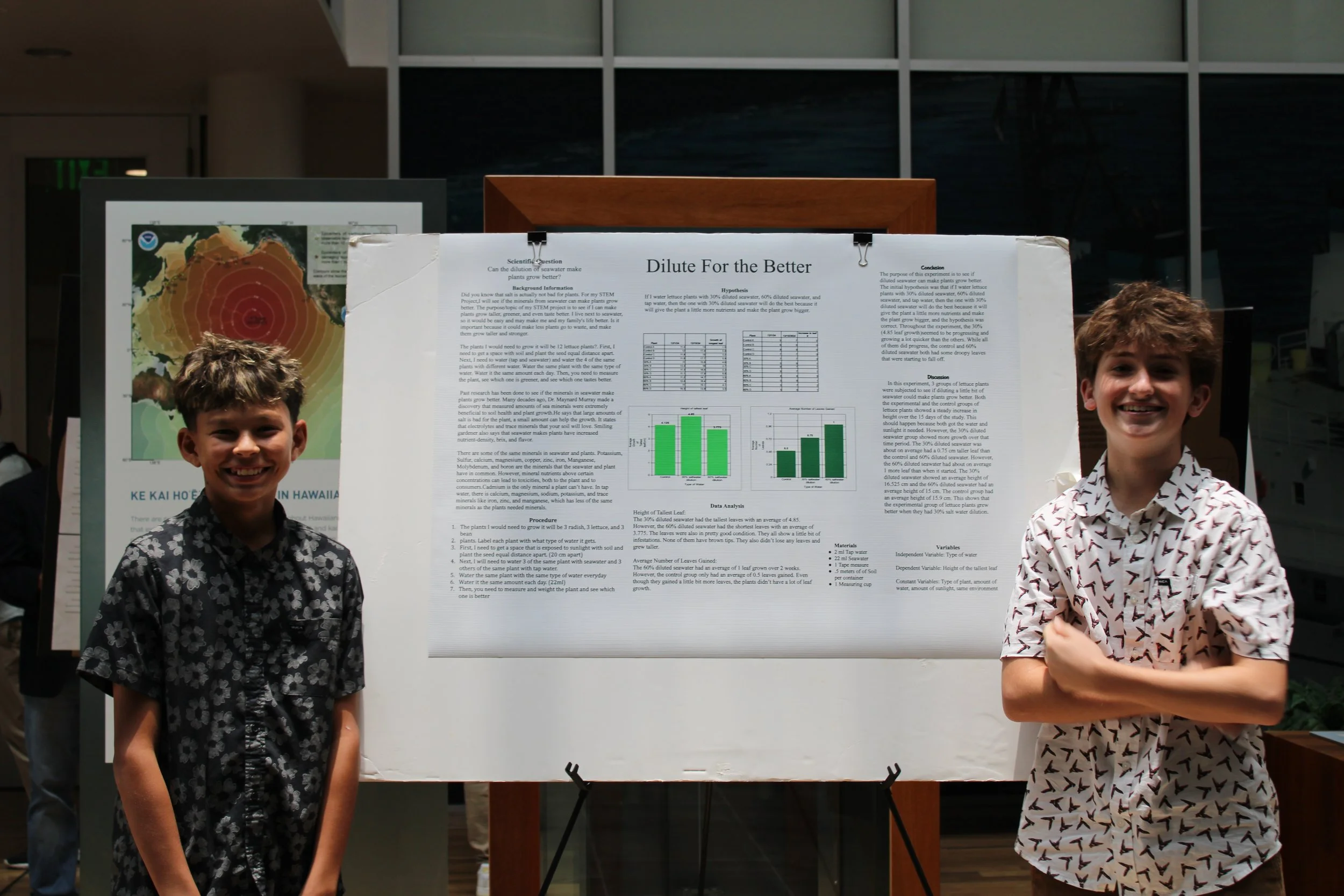
Students contribute to community through science. Photo credit: Grace Cajski
Let’s keep bringing people together and creating collaborative community. Join the Next 200.

